
Is My Child Really Behind in Reading — or Just a Late Bloomer? (And When a Little Extra Help Makes a Big Difference)
Late bloomer or actually stuck? A warm, honest guide to rough guideposts at 6, 7, and 8 — and when a little extra help makes a big difference.

I remember standing at pickup, half-listening to another mom talk about the chapter book her kid was flying through, and thinking: mine isn't doing any of that. My child was seven. He couldn't really read. And the sentence running on a loop in my head was the one so many of us think and never say out loud: "Everyone else's kid is reading and mine isn't. Is he behind, or will he just catch up?"
If that's where you are tonight, I want to say the thing I needed someone to say to me: you're not overreacting, and you're not a failure. You're paying attention. That's exactly the right instinct. Let's sort out what's actually going on.
First, the honest truth about "late bloomers"
Children learn to read on different timelines, and some make a lot of progress once instruction fits what they need.
But here's what I wish someone had told me sooner: waiting cannot tell you whether a child simply needs more time or has a persistent reading difficulty. Those children can look similar at first, and you do not need to settle the label at home.
Instead, look at the mechanics: what has your child been taught, how do they try to read an unfamiliar word, and are they making steady progress with clear, explicit instruction?
Rough guideposts by grade and point in the school year
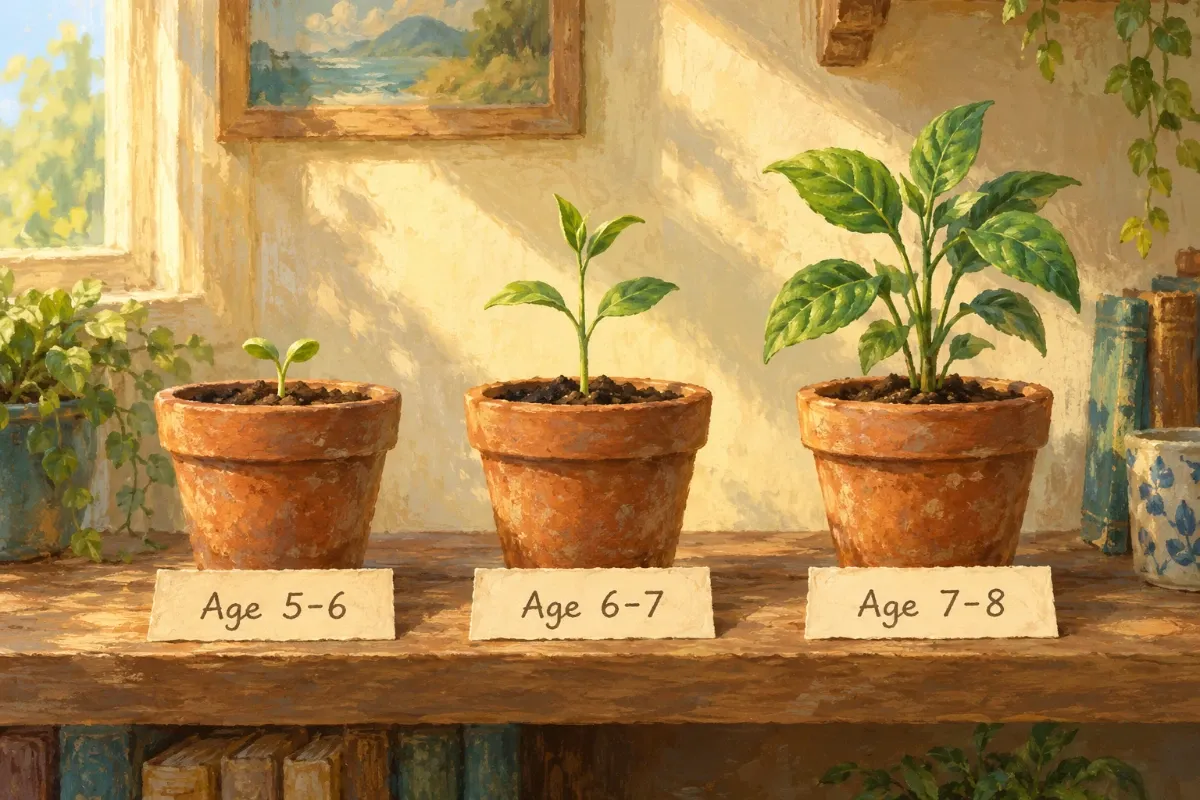
These are rough US grade guideposts, not diagnostic milestones. They describe skills children work toward across the school year. Read them in the context of what your child has been taught and whether it is the beginning, middle, or end of the year; curricula and school-start ages vary.
- Kindergarten (often age 5–6): Working toward hearing and changing individual sounds in simple words, learning common letter-sound connections, blending simple words such as sat, pin, and dog, and reading some common words and emergent-reader text.
- First grade (often age 6–7): Working toward decoding regularly spelled one-syllable words, breaking some two-syllable words into parts, and reading grade-level text with growing accuracy and fluency.
- Second grade (often age 7–8): Working toward decoding words with additional vowel teams, two syllables, common prefixes, and suffixes, while reading grade-level text accurately and fluently enough to support understanding.
Slow, effortful reading can be part of learning a new pattern. A birthday alone cannot tell you whether progress is on track. Compare the words with what your child has been taught, notice whether reading is getting easier over time, and ask the teacher if you are concerned. Effortful is not the same as broken.
When a little extra help makes a big difference
Some patterns are worth sharing with your child's teacher while you give short, focused practice at home. No one pattern explains why reading is hard, but concrete examples help the school decide what to check and teach next. Look for these:
- He guesses at words instead of sounding them out. He looks at the first letter or the picture and says something that isn't there ("horse" for "house"). This is a pattern worth understanding on its own; I wrote about it in Why Does My Child Guess at Words Instead of Reading Them?
- He knows his letter sounds but can't blend them. He can tell you c–a–t, but the whole word never clicks into "cat." That points to blending as a skill to teach directly; there's a step-by-step in He Knows His Letter Sounds but Can't Blend Them
- He reads a word, then can't read the same word two lines later. Nothing seems to stick.
- He's avoiding it. He stalls, groans, says "my tummy hurts," and suddenly needs water every time a book comes out.
- Family history. If reading was hard for a parent or sibling, that raises the odds, and it's useful information, not a verdict.
You do not need to count signs or wait for a birthday. If a pattern keeps showing up, your child is not making progress with the instruction they receive, or you are concerned, ask the teacher what recent screening shows and whether a fuller school evaluation would be appropriate. If there is a family history of reading difficulty or a concern about speech, language, or hearing, bring that to your child's pediatrician too. Practice and asking for support can happen at the same time. The American Academy of Pediatrics’ parent guidance also recommends talking with teachers and the pediatrician about reading concerns.
Why starting early makes it easier
This is the honest reason I stopped telling myself "he'll get there" and started helping instead.
Reading builds on itself: every word a child can sound out makes the next page a little easier. The U.S. Department of Education’s foundational-reading guide recommends teaching sound-letter connections and decoding explicitly, and having children read connected text every day. If a difficulty persists, screening or evaluation can help the school plan the next instruction. You are not behind as a parent. You noticed this now, and now is a good time to begin.
If you're wondering whether it's already too late, please read Is It Too Late for My Child to Catch Up on Reading? next. The short version is: almost certainly not.
What to actually do this week
You do not need a diagnosis to begin supportive practice, and you do not need to postpone screening while you practice. Here's where I'd begin:
- Watch one reading session like a scientist, not a coach. Don't correct. Just notice. When he hits a hard word, does he sound it out, or guess? Does he use the letters, or the picture? This gives you a concrete example to share; it does not diagnose the cause. If his books are too hard to show you much, the free reading check gives you a few words and short stories to watch him try, with no score.
- Make it short and warm. Ten low-pressure minutes beats a tense half hour. If reading time has already become tense in your house, you're not alone. See When Reading Ends in Tears.
- Focus on sounds and letters. Encourage him to connect each sound to its letter or letters, blend through the word, and then reread it in the sentence instead of guessing from the picture or context.
- Ask the teacher specific questions: "What has he been taught so far? What did his latest reading screening show? Can you tell me where he is with decoding, and do you recommend a fuller evaluation?" Concrete examples are more useful than "How's he doing?"
- Bring wider concerns to the pediatrician. Mention reading progress along with any family history or concerns about speech, language, or hearing. The pediatrician can help consider health or developmental factors and referrals; the school evaluates the reading and instructional needs.
Match the practice to what you noticed:
- If he guesses from the first letter or picture, read why guessing happens, then try Picture Pick with short decodable words.
- If he can say the sounds but cannot join them, use the step-by-step blending guide, then try Stretchy Blend.
- If letter sounds are still hesitant, start with a short round of Say the Sound.
These activities provide practice, not screening. If the pattern persists, share what you noticed with the school.

The hopeful part
Here's what helped us most: realizing that "behind" is a starting line, not a label. My kid wasn't lazy and wasn't broken. He was missing a few specific, teachable skills, and once we found them and taught them directly, reading stopped being a struggle and started being something he could do.
You do not need to decide tonight whether your child is a late bloomer or has a persistent reading difficulty. Look closely, start small, and bring what you notice to the teacher. Paying attention now gives the adults around your child something concrete to act on.
Try ReadPals for short, playful practice
ReadPals gives your child short, playful phonics lessons. It uses your child's answers to plan what to practice next, and a plain-language progress view shows what they have learned and what is coming next. ReadPals can provide practice between conversations with the teacher; it does not diagnose dyslexia or replace school screening, evaluation, or individualized instruction.