
Is It Dyslexia, or Is My Child Just Behind? A Plain-English Guide to the Signs
Wondering if it's dyslexia or just a delay? A calm, plain-English guide to the real signs, the b/d-reversal myth, and what to do either way.
If you are wondering about dyslexia, you can help tonight without trying to work out the cause yourself. Use one sound-letter pattern your child has already been taught and can say. If possible, choose one their teacher or specialist has confirmed.
Try this tonight
If your child has been taught /s/, /a/, and /m/, write Sam. Point under each letter and say, “/s/ /a/ /m/.” Then slide the sounds together: “Sam.” If you are unsure how to say /s/, /a/, and /m/ on their own, the free phonics sounds chart plays each one with an example word and a tip for saying it.
Let your child try once. If one sound is unfamiliar, supply it and return to a pattern they have already been taught. Do not ask them to guess from a picture or the first letter.
For more practice, open the short read-together passage and check its sound list first. It uses more letters than Sam, so use it only if those sounds have already been taught. If an untaught helper word such as the appears, simply say it for your child.
This is calm practice with a taught skill. It is not a dyslexia test or treatment.
What dyslexia means
Dyslexia affects accurate or fluent word reading, decoding, and spelling. It often involves difficulty noticing and working with the sounds in spoken words, then connecting those sounds to print. The International Dyslexia Association definition gives a fuller explanation.
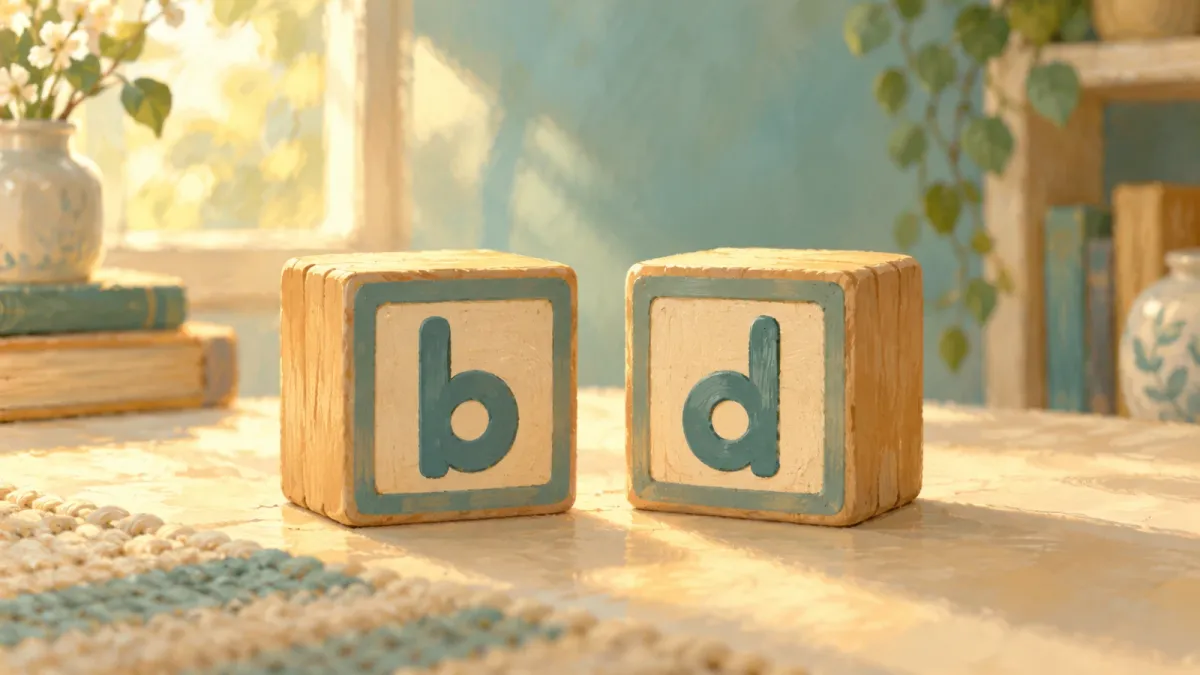
Reading difficulty does not tell you how capable your child is. It also cannot be identified from one habit. Reversing b and d, for example, does not establish whether a child has dyslexia. A qualified evaluation considers the child's history and a range of reading and language skills.
Notes to share
Write down a few specific examples of what you see. These might include:
- difficulty separating a spoken word into sounds or blending sounds into a word
- trouble learning sound-letter links that have been taught
- slow or effortful word reading
- difficulty sounding out an unfamiliar word
- spelling that remains difficult with instruction
Family reading history can also be useful context. These notes give the teacher or evaluator concrete information, but they do not diagnose dyslexia.

Ask for support
If you are concerned, ask the teacher or school for an evaluation now. You do not need to wait for a certain age, a group of signs, or home practice to work first.
Share examples such as, “She can say these three sounds separately, but joining them into a word is still hard.” Ask what reading instruction is being used and what support can begin while the evaluation moves forward.
A qualified evaluation uses history, observation, and formal measures across relevant reading and language skills. The Yale Center for Dyslexia & Creativity explains who may evaluate and what an evaluation can include.

Practice that fits
At home, reinforce a pattern that has already been taught. Read a few words that use it, then stop while the work still feels manageable. Keep reading stories aloud, too. Audiobooks and conversations about a story help your child stay connected to vocabulary, ideas, and enjoyable books while word reading is hard.
Instruction for dyslexia has a wider job. The International Dyslexia Association describes Structured Literacy as explicit, systematic, cumulative, and responsive to ongoing assessment. It includes phonology, sound-symbol links, syllables, meaningful word parts, sentence structure, and meaning. A trained teacher or specialist uses those pieces to plan and adjust instruction for the individual learner.
Home practice can reinforce that instruction. Reading aloud and audiobooks support access to language and stories. Neither takes the place of an evaluation or the instruction a child needs.
Optional practice
ReadPals offers short practice with letter sounds and blending that can sit alongside a child's school or specialist plan. It does not diagnose dyslexia or replace evaluation or instruction. There are always free lessons online.